Why Your Monstera's New Leaves Have No Fenestrations Yet
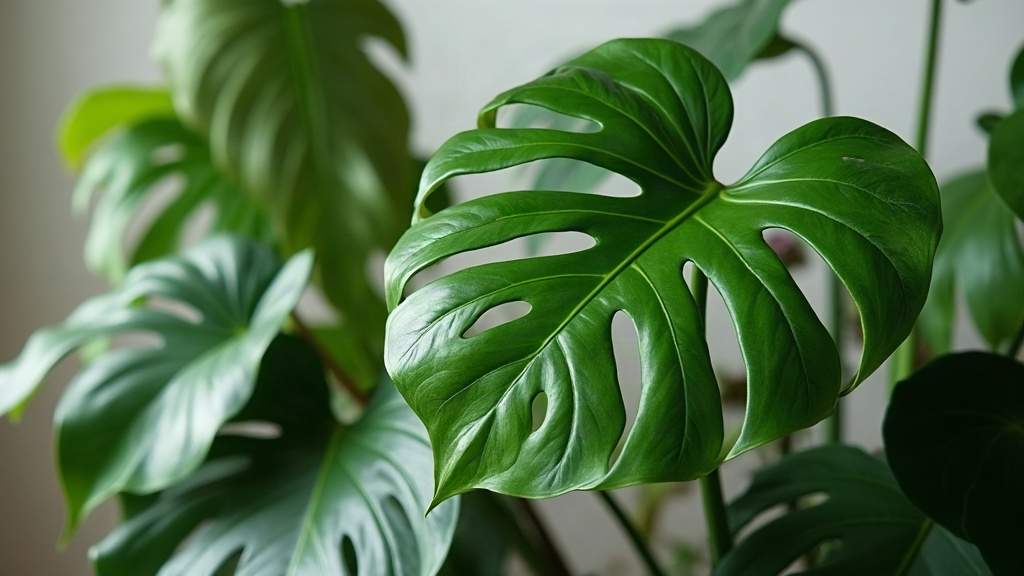
If your Monstera keeps pushing out leaves that are solid, heart-shaped, with no splits or holes anywhere, don’t panic. Nine times out of ten it comes down to three things: not enough light, a plant that’s simply too young, or recent stress from repotting or propagation. Fenestrations (those natural holes and splits you see on mature Monstera deliciosa leaves) aren’t automatic. They show up only when conditions line up, and young or stressed plants will skip them entirely until things settle.
What Fenestrations Actually Are
Fenestrations are the signature splits and holes that show up on mature Monstera deliciosa leaves. Botanists have a few theories about why the plant evolved this way in the wild:
- The gaps let sunlight filter down to the lower leaves instead of blocking it all
- They cut wind resistance during tropical storms, so the leaves don’t shred
- They help rainwater run off fast in a dense rainforest canopy
Since fenestrations are tied to both age and environment, a plant that isn’t picking up the right cues just won’t bother making them. It can be perfectly healthy and still skip the holes.
Top Reasons New Leaves Have No Holes
1. The Plant Is Still Juvenile
Every Monstera starts out in a juvenile phase, cranking out solid leaves no matter how well you treat it. Fenestrations usually don’t show up until the plant has pushed out somewhere between 6 and 10 leaves, and even then the first fenestrated ones might just have a slit or two, not the full Swiss-cheese look. If you picked up a small cutting or a nursery starter, the honest answer is: wait. There’s no trick that speeds up maturity.
2. Not Enough Light
This is probably the number-one reason a mature plant stalls out on fenestrations. Monsteras want bright, indirect light, think an east or south-facing window with a sheer curtain, or sitting 2-3 feet back from an unobstructed bright window. When light is too low, the plant responds by:
- Growing smaller, thinner leaves
- Stretching and leaning toward whatever light it can find (etiolation)
- Skipping fenestrations altogether to save energy
Fix: Move the plant closer to a brighter spot, or add a full-spectrum grow light running 10-12 hours a day if natural light just isn’t enough.
3. Recent Repotting or Propagation Stress
Leaves that pop out right after repotting, root pruning, or rooting a fresh cutting tend to come in smaller and plain. The plant is busy rebuilding its root system, not experimenting with leaf architecture. This is usually temporary, give it 2-3 leaf cycles and check again.
4. Lack of Support to Climb
In the wild, Monsteras are vines. They climb tree trunks using aerial roots, and that climbing motion is actually a trigger: once the plant senses it’s gripping something sturdy with better light up top, it starts producing bigger, more fenestrated leaves. A Monstera left to trail off a shelf or sit in a pot with nothing to grab onto can keep making small, unsplit leaves indefinitely.
Fix: Set up a moss pole or coir totem and gently guide the aerial roots onto it.
5. Nutrient Deficiency
If the plant is short on nitrogen, magnesium, or other micronutrients, you’ll often see small, pale, or consistently unfenestrated leaves. A balanced liquid fertilizer (a 20-20-20 or a houseplant-specific blend works fine) diluted to half strength every 4-6 weeks during the growing season, spring through early fall, usually sorts this out.
How Long Does It Take to See Fenestrations?
With solid light, a healthy Monstera can start showing splits anywhere from a few months to over a year out, depending mostly on its starting size. A large, well-rooted plant will respond to improved conditions much faster than a tiny cutting still working on its root system.
Quick Checklist to Encourage Fenestrated Growth
- Bright, indirect light for most of the day
- A moss pole or stake it can climb
- Consistent watering (let the top 2 inches of soil dry out between waterings)
- Monthly fertilizing through spring and summer
- Repotting every 1-2 years into fresh, well-draining aroid mix
- An occasional wipe-down of the leaves to help them soak up more light
Conclusion
Solid, unfenestrated leaves on a Monstera almost never mean something’s wrong, they’re usually just the plant telling you about its light, its age, or a recent disruption. Bump up the light, give it something to climb, and let it work through the juvenile stage at its own pace. Do that, and those signature splits tend to show up within a handful of new leaf cycles.