Why Your Calathea's Leaves Curl at Night and When to Worry
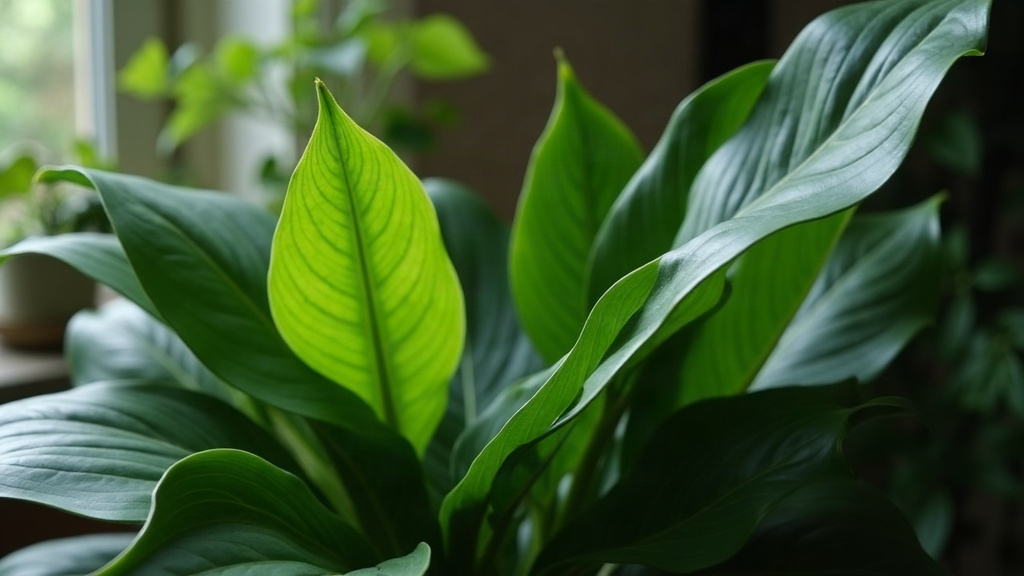
If your Calathea folds its leaves up every evening like it’s praying, take a breath. That’s not a distress signal, it’s just what the plant does. Calatheas belong to the “prayer plant” family, and this nightly leaf movement, called nyctinasty, is baked into their biology. That said, a handful of curling patterns do mean trouble, and telling them apart from the normal stuff is worth five minutes of your time.
What Is Nyctinasty, and Why Do Calatheas Do It?
Nyctinasty is the daily rhythm of leaves opening and closing in response to light and dark. It’s driven by a pulvinus, a tiny flexible joint at the base of each leaf that swells on one side and shrinks on the other, tilting the leaf’s angle up or down.
Think about where Calatheas actually come from: the dense understory of tropical rainforests, where light is scarce and rain is constant. Researchers think the nightly fold serves a few purposes:
- Channeling dew and rainwater down toward the roots instead of letting droplets sit on the leaf surface, which invites fungal and bacterial problems.
- Conserving moisture by shrinking the leaf area exposed to dry night air.
- Shielding leaves from insects and falling debris while the plant “sleeps.”
Watch one closely near dusk and you’ll see the leaves rise and press together like hands folded in prayer, then loosen and flatten out again once the sun comes back up. It’s part of why Calatheas and their cousins, the true Marantas, get so much attention. The patterned leaves are gorgeous, sure, but the movement is the real party trick.
Normal vs. Stressed Curling: How to Tell
Signs the curling is completely normal
- It shows up like clockwork every evening and undoes itself every morning.
- Leaves fold upward along the midrib, the way a book closes.
- Everything else about the plant looks fine: good color, firm texture, no spotting.
- The curling is even across the whole plant, not just one side.
Signs something is actually wrong
- Leaves are still curled well into the day and won’t relax even with plenty of light.
- Curling shows up alongside browning edges, yellowing, or crispy tips.
- Only a few leaves curl while the rest stay flat, which usually points to a localized watering problem or pests.
- Leaves roll tightly inward like a cigar instead of the soft upward fold you’d expect at night.
If leaves are still curled by 10 or 11 a.m., or if you’re seeing discoloration alongside it, that’s your cue to dig deeper.
Common Causes of Problem Curling
1. Low Humidity
These plants grew up in tropical air that rarely dips below 60-70% humidity. Bring one into a home with 30% humidity (typical for a heated apartment in January) and it will let you know. Dry air pulls moisture out through the leaf edges faster than the roots can replace it, and the tips curl and crisp up, sometimes permanently.
Fix: Run a humidifier nearby, cluster it with other plants to create a shared microclimate, or set the pot on a pebble tray with water sitting just below the pot’s base. Aim for 50-60% humidity if you can manage it.
2. Underwatering or Overwatering
Both push the plant into curling, but the leaves feel different depending on which extreme you’re dealing with:
- Underwatered: leaves go dry and papery, curling inward with tips that feel crispy to the touch.
- Overwatered: leaves turn soft and almost mushy, drooping and curling at once, often with yellow patches mixed in.
Fix: Stick a finger about 2 inches into the soil before you water. If it’s still damp, wait. Water only when that top layer has dried out, and make sure the pot actually drains, no exceptions.
3. Tap Water Sensitivity
Calatheas have a reputation for being fussy about tap water, and it’s earned. Chlorine, fluoride, and the mineral salts that build up in municipal water all irritate them, showing up as curling and browned edges weeks after the fact.
Fix: Switch to filtered water, distilled water, or rainwater if you can collect it. If tap water is genuinely your only option, let it sit uncovered for 24 hours so at least the chlorine has a chance to evaporate.
4. Too Much Direct Sun
A few hours of harsh afternoon sun through a south-facing window can scorch the leaves, and the plant curls them up defensively to cut down on exposed surface area, sort of like squinting.
Fix: Move it to bright, indirect light, an east-facing window works well, or keep it several feet back from a south or west-facing one.
5. Temperature Stress
Cold drafts near a door, a blast from the AC vent, or ambient temperatures under 60°F (15°C) can trigger a curl that doesn’t just bounce back overnight the way normal nyctinasty does.
Fix: Keep the plant clear of doors, vents, and drafty windowsills. It’ll be happiest somewhere between 65-80°F (18-27°C).
Quick Checklist Before You Worry
- Does the curling straighten out by mid-morning? That’s just nyctinasty, nothing to fix.
- Is it just one section curling while the rest looks normal? Check that spot for pests or a drainage issue underneath.
- Are the edges brown or crunchy? Look at humidity and water quality first.
- Is the soil soggy, or has it been bone-dry for days? Time to rework your watering habits.
- Did you recently move the plant to a brighter or colder spot? That alone could explain everything.
Conclusion
Most of the time, that nightly curl is just a Calathea doing what millions of years of rainforest evolution taught it to do: fold up, protect itself, wait for morning. The real red flags are curling that hangs around past breakfast, curling that only hits part of the plant, or curling that comes with brown edges, yellow patches, or mushy leaves. Start with humidity, water quality, and light, since those three cause the vast majority of real problems, and give it a couple of weeks. Most Calatheas snap back once the underlying issue is sorted out.