Creating a Low-Maintenance Terrarium for Offices With No Windows
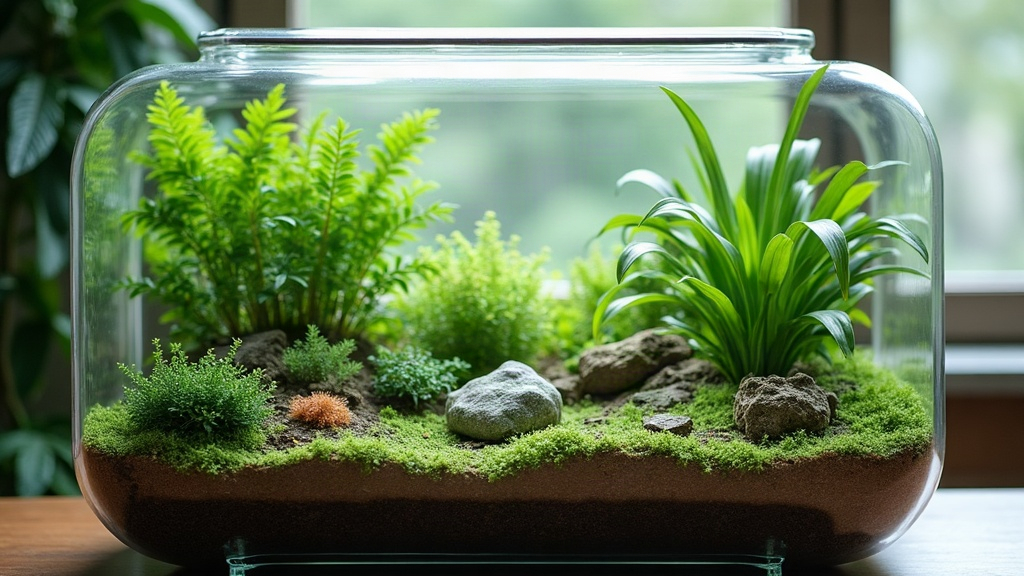
If your office doesn’t have a single window, don’t write off the idea of having real, living greenery on your desk. A terrarium can still flourish there, you just have to swap sunlight for a cheap grow light and pick plants built for enclosed, dim conditions. Below is the exact setup (container, light, soil layers, plant picks) that’ll keep a terrarium alive for months with barely any fussing.
Why Windowless Offices Are Actually Great for Terrariums
Sounds backwards, right? But a terrarium with no direct sun is often easier to keep alive than one sitting in a sunny window. Direct light heats up glass fast, swings the internal temperature all over the place, and can literally cook plants inside a sealed container (the humidity has nowhere to escape). In a windowless office you’re in charge of the light entirely. It’s steady, moderate, predictable. That kind of consistency is exactly what low-maintenance plants want.
Step 1: Choose a Closed Container
Go with a closed terrarium, meaning a jar, an apothecary globe, anything with a lid. Closed setups generate their own mini water cycle: moisture rises, hits the glass, condenses, then drips back into the soil. Water once every 4 to 8 weeks and you’re basically done.
- Best containers: glass cookie jars, big mason jars, lidded fish bowls, or dedicated terrarium globes
- Size: at least 8 to 10 inches wide, so plants have breathing room and your hand can actually reach in to trim things
- Avoid: narrow-neck bottles, unless you’re into fishing moss out with 12-inch tweezers for fun
Step 2: Add a Small Grow Light
No window means no free light, so a grow light isn’t optional here. Good news: it doesn’t need to cost much or look complicated.
- A small LED grow bulb that screws into any regular desk lamp, or a clip-on USB grow light, both do the job fine
- Look for full-spectrum LEDs around 6500K (daylight white). 5 to 10 watts is plenty for something sitting on a desk
- Keep it on 10 to 12 hours a day using a $10 outlet timer, so you’re not the one remembering to flip a switch every morning
- Position it 6 to 12 inches above the terrarium, not jammed right on top
This one step is really what makes the whole windowless setup work. Skip it, and even the toughest “low-light” plants will fade out over a few months.
Step 3: Build the Right Layers
Layering the base right is what keeps roots from rotting and the mini-ecosystem balanced long-term:
- Drainage layer – 1 to 2 inches of small pebbles or gravel
- Charcoal layer – a thin layer of activated charcoal, keeps mold and smell down
- Substrate – potting soil mixed with sphagnum moss, holds moisture without turning swampy
- Plants and moss topping – locks humidity in near the surface
Step 4: Pick Plants That Tolerate Low or Artificial Light
Not every plant sold for terrariums can handle a small grow light. Stick to slow growers that are used to humid, dim forest-floor conditions in the wild:
- Moss (sheet moss, cushion moss) — about as close to indestructible as plants get, loves humidity
- Nerve plant (Fittonia) — those colorful veined leaves actually do better in closed, humid air
- Baby’s tears (Soleirolia soleirolii) — fills in fast, forgiving even in dim light
- Pothos (small cuttings) — nearly bulletproof, though growth slows noticeably under a grow light
- Peperomia varieties — stays compact, handles low light, barely needs watering
- Small ferns (Button fern, Maidenhair) — a terrarium classic, cares more about humidity than about bright light
Skip succulents and cacti entirely. They want bright, dry air, and a closed humid terrarium will rot them within weeks.
Maintenance Routine (5 Minutes a Month)
- Watering: wait until the inner glass stays dry consistently (peek weekly, water roughly once a month)
- Ventilation: if condensation is heavy and constant, prop the lid open for a couple of hours to head off mold
- Trimming: snip anything touching the glass or growing too tall, every few weeks
- Light timer: double-check the settings or batteries every couple of months so it doesn’t quietly stop working
Common Problems and Quick Fixes
- Mold showing up: usually too much moisture or decaying leaf matter, pull out the dead bits and air it out briefly
- Pale, stretched-out growth: the grow light’s too weak or too far away, move it closer or bump the wattage a notch
- Zero condensation ever: it’s drying out, add a tablespoon of water and seal it back up
Conclusion
Not having a window isn’t a dealbreaker, it’s almost an advantage. You get to build a fully controlled, self-sustaining little ecosystem instead of fighting unpredictable sun. A closed glass jar, a cheap LED grow light on a timer, the right soil layers, and shade-loving plants like moss, fittonia, and ferns will get you a living, green centerpiece that only asks for five minutes of your time each month.