How to Repot a Rootbound Houseplant Step by Step
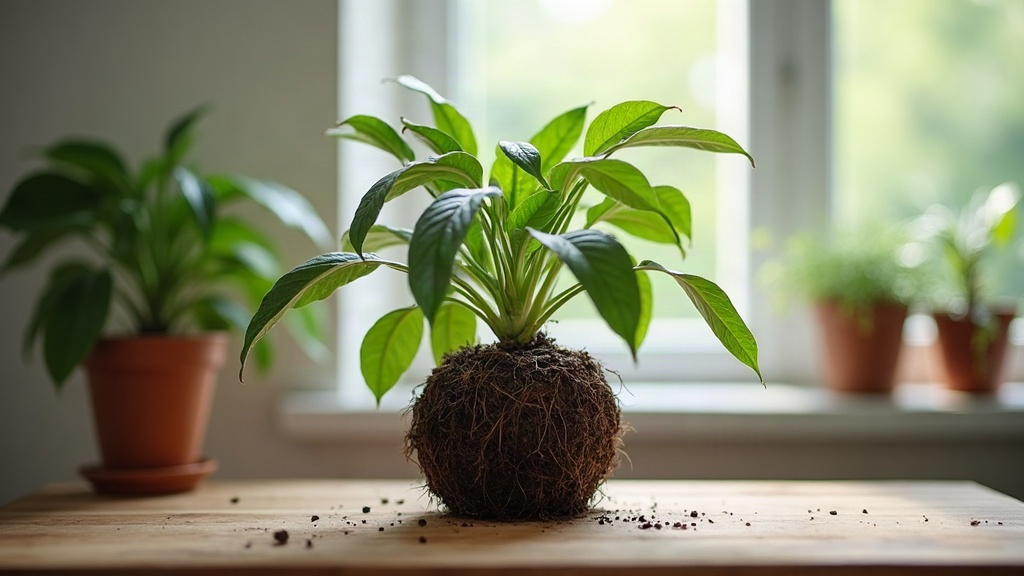
If your houseplant has roots winding around the pot, pushing through the drainage holes, or needs water again the day after you watered it, it is probably rootbound. Repotting gives those crowded roots room to spread out again. The job usually takes 15 to 20 minutes: loosen the root ball, remove unhealthy roots, and move the plant into a slightly larger pot with fresh soil.
Signs Your Plant Is Rootbound
Check the plant before reaching for a new pot. Look for these common clues:
- Roots showing at the soil surface or emerging from drainage holes
- Water rushing through the pot without properly soaking the soil
- Slow or stalled growth, even in spring and summer
- A plant that topples easily because the expanding roots have displaced soil
- Yellow lower leaves despite a normal watering routine
Want to be sure? Ease the plant out of its pot. A rootbound plant will have a thick, tangled root mass with very little loose soil left around it.
What You’ll Need
- A new pot that is 1 to 2 inches (2 to 5 cm) wider than the current pot
- Fresh, free-draining potting mix suited to the plant, such as cactus mix for succulents or chunky aroid mix for monstera and pothos
- Clean scissors or pruning shears
- A trowel, or even an old kitchen spoon
- Optional: gloves and a tarp or newspaper for quick cleanup
Resist choosing a dramatically larger pot. A pot that is too big stays wet longer than the plant can handle. For example, a pothos moved from a 4-inch pot into an 8-inch pot may sit in damp soil for days, increasing the chance of root rot.
Step-by-Step: How to Repot a Rootbound Houseplant
1. Water the plant a day before
Water the plant the day before repotting. Slightly damp soil holds together better and makes the root ball easier to remove without snapping too many roots.
2. Remove the plant from its pot
Lay the pot on its side, then gently squeeze flexible plastic pots or tap the sides of rigid ones. Slide the plant out slowly. Support it near the base of the stem, not by the leaves, which can tear surprisingly easily.
3. Loosen the roots
Gently work your fingers through the outer layer of roots to separate them. If the roots are tightly wrapped in circles, make 3 or 4 shallow vertical cuts around the sides of the root ball with clean scissors, about 1/2 inch deep. Make one shallow cut across the bottom too. This small bit of root pruning encourages fresh roots to grow outward into the new soil rather than continuing to spiral.
4. Trim damaged roots
Cut away roots that feel mushy, look black, or smell unpleasant. Healthy roots are usually firm and pale, tan, or light brown, depending on the plant. Removing rotten sections helps protect the healthy part of the root system.
5. Add fresh soil to the new pot
Place a couple of inches of fresh potting mix in the bottom of the new pot. Check the height before filling further: the plant should sit at roughly the same soil level as it did in its old container.
6. Position and fill
Set the plant in the center of the pot and add soil around the sides. Press lightly to eliminate large air pockets, but do not compact the mix hard. Roots need oxygen as much as they need moisture.
7. Water thoroughly
Water until excess water flows from the drainage holes. This settles the new soil around the roots. Hold off on fertilizer for 4 to 6 weeks, since recently handled roots need time to recover and fresh potting mix often includes nutrients already.
Aftercare Tips to Prevent Transplant Shock
- Keep the plant away from strong, direct sun for about one week
- Water consistently, but avoid keeping the soil soggy, since disturbed roots take up water more slowly
- Expect a short adjustment period. A little leaf droop for several days is normal
- Skip fertilizer right after repotting because fresh soil already provides some nutrition
How Often Should You Repot?
Most houseplants benefit from repotting every 12 to 18 months. Fast-growing plants, including pothos and spider plants, may need a new pot each year. Slower growers like snake plants and ZZ plants are often happy for 2 to 3 years before they need more space.
Conclusion
Repotting a rootbound plant is straightforward once you know what to look for. Check the roots, loosen the compacted root ball, remove any damaged sections, and choose a pot only one size larger. Give the plant a quiet week with gentle light and careful watering, and most will settle in within a few weeks with fuller, healthier growth.